
The Inverted Funnel: Dementia
There are moments in life when something quietly sacred occurs. No warning. No signposts. No dramatic announcement from above. Life simply shifts—and only later do we realize that our hearts, our understanding, and our sense of direction have been forever changed.
A while back, was one of those moments for me.
I was invited to a book signing and almost didn’t attend. The day had been long, my thoughts scattered, my spirit tired. Then, unexpectedly, an appointment changed. A small interruption. A simple opening. And in that opening, grace stepped in.
A friend had saved me a seat close to the author, who was about to speak about his new book. I believed I already understood the topic. I had heard talks like this before. But I was not truly present—yet. That was about to change.
The speaker began with stories of his life, offered with humility, warmth, and gentle humor. He had a way of inviting people in—lowering defenses, opening hearts. Laughter came easily, but beneath it was something deeper: truth spoken with love.
Then he shared a thought that settled into my soul.
Life, he said, can become an inverted funnel.
When that happens, what do we do? How do we respond when the future we imagined begins to narrow instead of expand? What happens when we realize we are no longer directing the story of our lives, but are being asked to faithfully walk through a chapter we never expected to face?
The speaker was Martin Schreiber, former Governor of Wisconsin, a man whose life was devoted to service. Like so many of us, Marty had plans—visions of retirement, shared dreams, a well-earned season of peace after years of responsibility.
But as Scripture and lived experience remind us, “We can make our plans, but the outcome is not always ours to decide.”
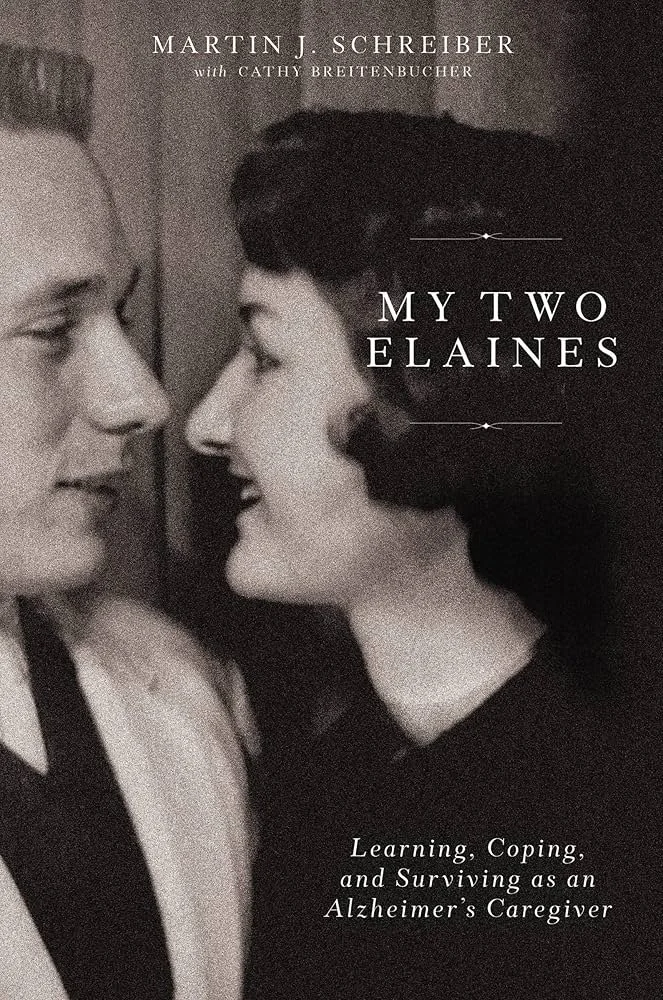
Marty’s life changed when his beloved wife of more than 60 years, Elaine, was diagnosed with Alzheimer’s disease. His book, My Two Elaines: Learning, Coping, and Surviving as an Alzheimer’s Caregiver, is not simply about dementia. It is about love, surrender, faith, and the quiet strength required to walk beside someone whose reality is changing day by day.
Dementia arrives without invitation. It follows no timeline and offers no instruction manual. It simply is. And when it enters our lives, it asks something profound of us—not just as caregivers, but as human beings.
Marty described dementia through the image of an inverted funnel. When the narrow end is placed to the eye, the world opens wide. Possibilities feel endless. But when the funnel is turned, and the wide end rests against the eye, vision narrows. Focus becomes intense, limited, and often confusing.
For a person living with dementia, this narrowing can become their entire world. Time bends. Memories blur. Emotions rise without explanation. For the spouse or family member who becomes the caregiver, this new reality can feel like a holy burden—one filled with grief, devotion, exhaustion, and love all at once.
Marty reminded us that caregivers are the unseen saints among us.
Too often, caregivers sacrifice their own health—mind, body, and spirit—out of love. Without support, nourishment, rest, and human connection, caregivers can slowly disappear alongside the person they are caring for. Many do not outlive their loved one.
One of the most moving truths Marty shared was this: in order to care for Elaine, he had to let go of the first Elaine.
Not in memory. Not in love. But in expectation.
By releasing who she once was, he was able to fully love who she had become. In doing so, he discovered a new form of devotion—one rooted in presence rather than history, in compassion rather than correction. When his heart made that shift, something remarkable happened: though the funnel narrowed, the world opened again—for both of them.
Marty also spoke of “therapeutic fibbing,” a phrase unfamiliar to many that evening. Dementia reshapes reality. Facts can dissolve. Stories intertwine. Arguing over what is “true” often leads only to pain. Sometimes the most loving response is not correction, but kindness. Not proving a point, but preserving peace. Entering their reality rather than pulling them forcefully back into ours.
As others shared their stories, the room felt heavy with recognition—and also with relief. We are not alone in this struggle.
For those of us in our senior years, this message carries particular weight. We have worked hard. We have built homes, families, routines, and identities. We have earned the right to enjoy the lives we envisioned. And yet, life—by its very nature—is impermanent.
So cherish what you have today. Hold your partner’s hand. Sit in your favorite chair. Walk through your home with gratitude. And gently, without fear, allow yourself to prepare—not because you expect loss, but because love asks us to be ready.
Perspective can change in an instant. Our response to that change—our patience, our humility, our faith—becomes the measure of how fully we continue to live.
A loving attitude, connection with others, movement, laughter, prayer, reflection, and even a simple glass of red wine can nourish both caregiver and loved one. Learning, coping, and surviving can become sacred acts when they are rooted in compassion.
Most of us will walk beside someone touched by dementia. By listening to voices like Marty Schreiber’s, we prepare our hearts not just to endure, but to love more deeply than we ever imagined.
May we all strive to keep the narrow end of the funnel at our eye—so that even when life becomes smaller, we may still see beauty, meaning, and grace in the world before us.
A Gentle Invitation
If this story speaks to your heart, consider learning more—for yourself, your spouse, or someone you love. Education is not an act of fear; it is an act of love and readiness.
For more information or to order an autographed copy of My Two Elaines, visit www.mytwoelaines.com or follow on Facebook at www.facebook.com/MyTwoElaines.
You may also reach out to the Aging and Disability Resource Center 24/7 for compassionate guidance and support at 1-800-272-3900.
You are not alone. And neither is the one you love.