
I Live in My Home for Free! … Really?
Most of us put off decisions that nudge us out of our comfort zone. Now imagine facing one as significant as leaving a home you’ve lived in for 30 or 40 years. In a survey of my senior clients, the average length of time spent in their last home before moving was 34 years. Not surprisingly, the number one reason people delayed making a move—even when a change was clearly needed—was fear of the unknown.
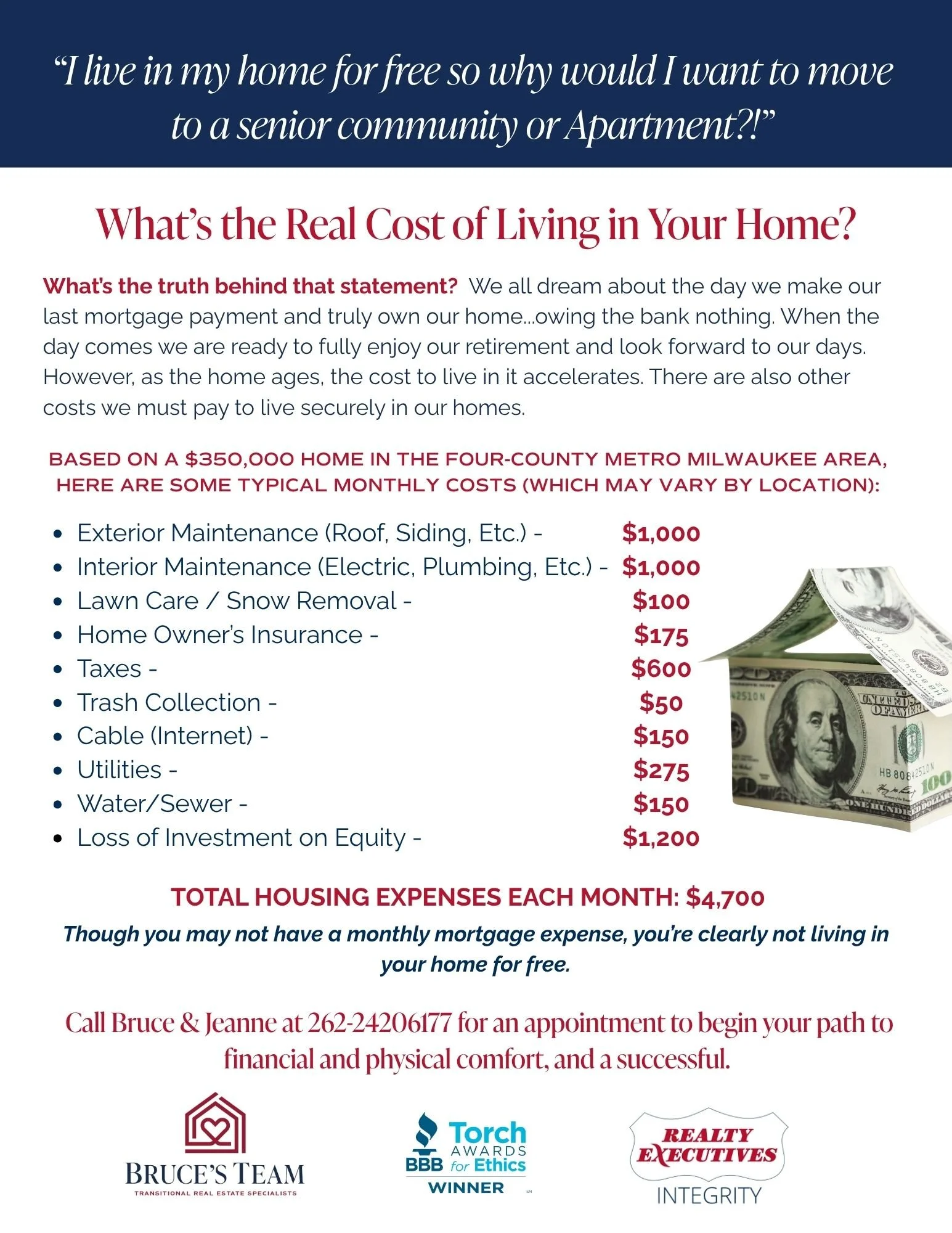
When procrastination takes hold, we become very good at finding reasons to stay put. One of the most common is telling ourselves, “I live in my home for free.” It sounds reassuring, but in most cases, it simply isn’t true.
Even without a mortgage, there are ongoing and often increasing costs to remaining in a long-time home: property taxes, insurance, utilities, maintenance, repairs, and unexpected expenses. Just as important—but often overlooked—is the cost of having your home equity sit idle. That equity represents many years of hard work and appreciation, yet it may not be working for you in a meaningful way.
That’s why I often collaborate with senior-focused financial planners. Their role is to help homeowners clearly understand the true cost of staying put versus the financial opportunities that may come with a move—to a condominium, apartment, or senior community. They also help explain how home equity can be used to support independence, security, and peace of mind.
Many homeowners are surprised to learn that most will pay little or no capital gains tax when selling their primary residence. Couples may exclude up to $500,000 in gains, and single homeowners up to $250,000, provided the home was lived in for two of the past five years. This means that when the home is sold, much of that equity can be reinvested—potentially generating income and flexibility, especially if interest rates rise.
As you think about the next five to ten years, consider more than just finances. Be honest about physical demands, ongoing upkeep, and your overall sense of well-being. Waiting for a crisis—whether health-related or home-related—to force a decision can limit your options and add unnecessary stress.
A thoughtful conversation now can make all the difference later. Speaking with a senior financial planner and a Senior Real Estate Specialist can help you understand your options, your equity, and how your home can continue to support the lifestyle, freedom, and independence you deserve.
If you’d ever like to explore these questions at your own pace, my team and I are always here as a resource—simply to listen, provide clarity, and help you plan with confidence, whenever the time feels right.